
UK student visa requirements and how to apply


04 Mar 2026
— Blog
Securing a place at a UK university or college is a major milestone. For many students, it represents years of preparation and a significant financial commitment. The student visa application is what turns that offer into permission to study.
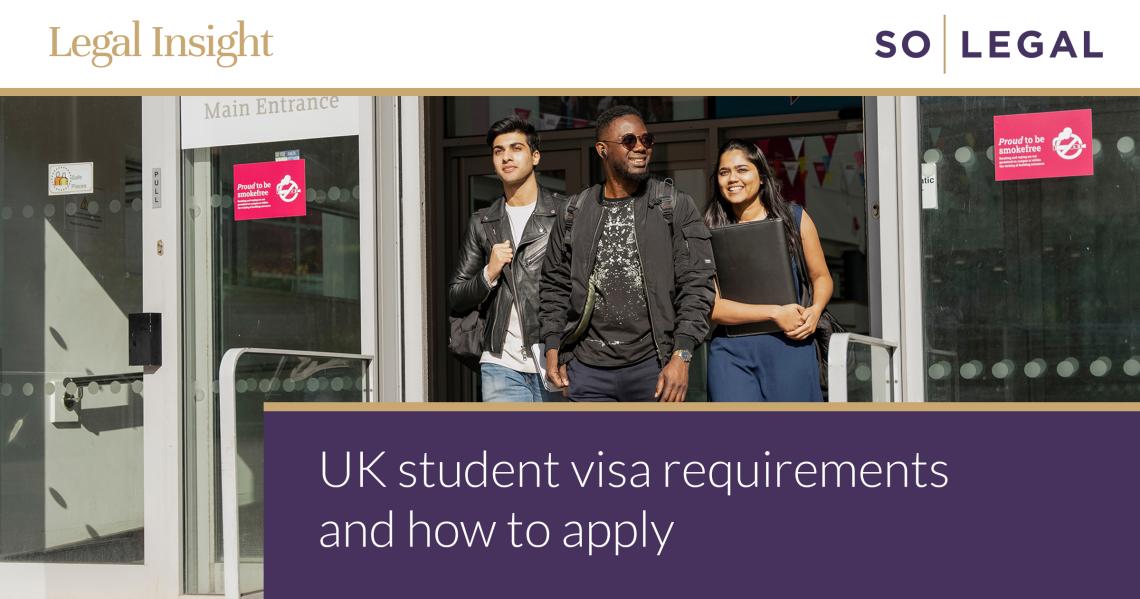
The student visa route is governed by Appendix Student of the Immigration Rules. It is structured and points-based, but it is also document-heavy and strictly assessed. Small errors in financial evidence, timing or sponsorship details can lead to refusal, even where a student clearly qualifies.
Whether you are applying from overseas or switching from inside the UK, understanding the requirements before submitting your application is essential.
What is the student visa route
The student visa route allows overseas nationals to study in the UK at an institution that holds a valid student sponsor licence.
To qualify, you must:
- Have an unconditional offer from a licensed sponsor.
- Receive a valid confirmation of acceptance for studies (CAS).
- Meet the financial requirement.
- Meet the English language requirement.
- Satisfy suitability and immigration history requirements.
What is a CAS and why it matters
A confirmation of acceptance for studies (CAS) is not simply an offer letter. It is an electronic record issued by your university or college confirming:
- Your course title and level.
- Start and end dates.
- Tuition fees.
- Payments already made.
- Sponsor licence details.
Each CAS contains a unique reference number, which must be entered in your visa application.
If the information in your application does not match your CAS exactly, including course details or fee payments, the Home Office can refuse the visa.
A CAS can only be used once and must be used within its validity period.
The financial requirement
The financial requirement is one of the most common reasons for student visa refusals.
You must show you can pay:
- Any outstanding tuition fees for your first academic year, up to nine months.
- Living costs, known as maintenance.
Your required tuition fees will be stated on your CAS.
The maintenance requirement currently stands at:
- £1,529 per month for up to nine months if studying in London.
- £1,171 per month for up to nine months if studying outside London.
In most cases, you must show that you have held the required funds for at least 28 consecutive days. The end date of that 28-day period must fall within 31 days of your visa application date.
If the balance falls below the required amount at any point during the 28-day period, the financial requirement may be treated as not met.
Bank statements must meet strict formatting standards. Missing pages, incorrect dates, or incomplete transaction histories can result in refusal, even when sufficient funds are available.
If you have held valid immigration permission in the UK for at least 12 months at the date of application, you will not normally need to provide evidence of funds, although the requirement must still be met.
English language requirement
Your sponsoring institution will normally assess your English language ability before issuing your CAS.
However, the Home Office requires confirmation that the English language requirement has been met in accordance with Appendix Student. The level required depends on the course and qualification.
Applying from overseas
Most students apply for a student visa from their home country.
You may apply up to six months before your course start date. After submitting your application, you must attend a biometric appointment and may need to provide additional supporting documents.
Processing times vary, particularly during peak academic periods. Errors in financial evidence frequently cause delays.
Universities operate strict enrolment deadlines. A refused or delayed visa can mean deferring your course start or withdrawal of your CAS.
Switching to a student visa from inside the UK
In certain circumstances, it is possible to switch to the student route from within the UK.
Switching is not permitted from all visa categories. Your current immigration status, timing and course start date are critical factors.
An application must normally be submitted before your existing leave expires. Overstaying can seriously affect future immigration applications.
If you are considering switching routes, early advice is important to ensure compliance.
Working while on a student visa
Work permissions depend on the level of study and the specific conditions attached to your immigration status.
Most degree-level students may work up to 20 hours per week during term time and full-time during official vacation periods. Students studying below degree level are typically limited to 10 hours per week in term time.
Breaching work conditions can affect future applications, including skilled worker or graduate visa applications.
After your course: the graduate route
Many students move from the student route to the graduate visa after successfully completing their course.
The graduate route allows eligible students to remain in the UK for two years (if you apply on or before 31 December 2026) and18 months (if you apply on or after 1 January 2027) following completion of an undergraduate or master’s degree, or three years following completion of a PhD or doctoral qualification.
The application must be made from within the UK and before your student visa expires.
Planning ahead before your course ends is essential.
Why student visas are refused
Many refusals arise not because a student lacks eligibility, but because evidence has been presented incorrectly.
Common refusal reasons include:
- Funds not held for the full 28-day period.
- Bank statements not meeting formatting requirements.
- Discrepancies between the CAS and the application.
- Previous immigration breaches.
- Failure to meet suitability requirements.
A refusal can disrupt your studies and complicate future UK immigration history.
Immigration rules and deadlines
The student route is points-based and document-driven. Applications are assessed against the Immigration Rules in force at the date of decision.
University deadlines are fixed. The Home Office evidential rules are strict. The two do not always allow room for error. Preparation and timing matter.
Guidance from our immigration solicitors
Student visa applications are time-sensitive and detail-driven. A single technical error in financial evidence, CAS details or timing can result in refusal and disruption to your studies.
Sanae Sahebjalal leads our immigration team at SO Legal and advises international students on applications, extensions and switching within the UK. We assist at every stage, from reviewing your financial documents before submission to preparing and structuring the full application where required.
Sanae explains:
“Student visas are often refused for avoidable technical reasons. Early review of financial evidence and timing can prevent unnecessary delays, particularly where university deadlines are fixed.”
If you are preparing a student visa application, facing a tight enrolment deadline, concerned about your financial evidence or considering switching routes inside the UK, taking advice before you submit can significantly reduce risk.
Get in touch to speak with our solicitors.
Expert advice on
student visas