
How can Japanese Knotweed affect buying and selling properties?


09 Jun 2023
— Blog
Japanese Knotweed: these are two words that those selling and buying property do not want to hear. This article aims to touch on everything you need to know about the infamous weed and why it has a reputation that precedes it.
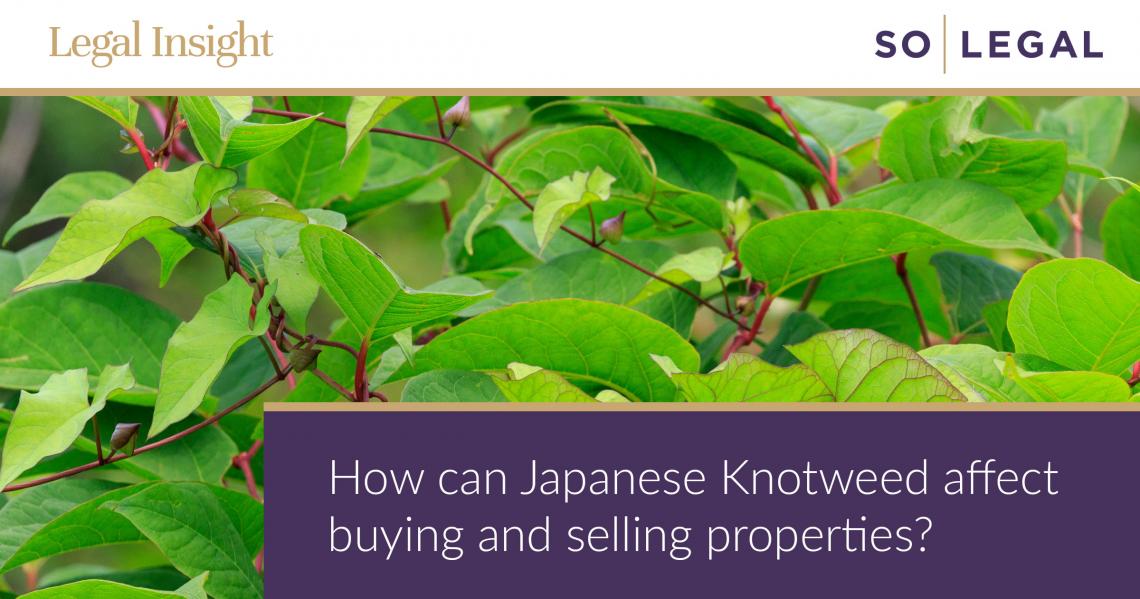
What is Japanese Knotweed, and why is it a problem?
Japanese Knotweed is an invasive perennial weed that grows rapidly and can be difficult and costly to eradicate.
This is a problem for homeowners with Japanese Knotweed present on their property as the roots can be so strong and invasive that they have the potential to cause damage to concrete foundations and structures.
The weed has garnered quite a reputation over the years, resulting in properties with Japanese Knotweed present experiencing a notable decrease in value.
This issue creates a knock-on effect as many lenders have become reluctant to lend on a property with Japanese Knotweed as their security in the property is seen as potentially compromised.
Do you legally have to disclose Japanese Knotweed when selling your property?
In short, the answer is yes. Japanese Knotweed aside, it is your duty as a seller to be honest when selling your property, as this can otherwise be construed as a misrepresentation if you are caught not being honest.
In particular, with Japanese Knotweed, there is a question within the Property Information Form (TA6), one of the general protocol forms used in conveyancing. This question must be answered; therefore, it is essential to disclose this if you know it.
One thing to note is that if you are unsure whether Japanese Knotweed is on the property, it is best to answer the protocol forms with ‘not known’ rather than ‘no’. This is because it will ensure your answers are accurate, and it invites the buyer of the property to make their own inspections on the matter.
Lastly, if the estate agent is aware of Japanese Knotweed being present on the property, they should disclose this to the buyer to avoid later being accused of misrepresentation.
Buying a property with Japanese Knotweed
Japanese Knotweed present on a property does not mean you should instantly disregard the property, as the issue is certainly treatable and can be eradicated if dealt with properly. However, there are some points which you should be aware of.
Should you buy a property with Japanese Knotweed, it will be your responsibility to control its growth or treat it to ensure that it does not spread uncontrollably onto neighbouring property. You must also note that you cannot dispose of Japanese Knotweed in your usual garden waste or recycling bins, as it is classed as controlled waste, and it is illegal to dispose of it in this way. The waste must be taken to an approved site that will handle it correctly.
If you decide to treat the issue professionally, this can be costly, and treatment plans are often carried out over several years in stages. However, professional treatment plans can be very successful and can completely eradicate the weed. If the property you are looking to buy has an ongoing treatment plan in place, this will likely help your case with any mortgage lender.
You must note that Japanese Knotweed is likely to affect any building insurance premium you take out. Whilst you do not legally have to disclose this, the effect of non-disclosure may result in the property not being adequately insured for any issues related to the weed.
Finally, there are indemnity insurance policies available for a one-off premium payment. These are aimed to insure against any losses arising from any remediation works and any costs associated with altering, repairing, or demolishing a part of the property resulting from any damage caused by the weed. However, it is not guaranteed that these policies will pay out when required, so it is important to err on the side of caution.
Is Japanese Knotweed a worry of the past?
There have been recent discussions that suggest that the weed may not be quite as damaging as its reputation suggests. Research has shown that the weed is no more damaging than other species not subject to such scrutiny and strict lending policies.
However, this does not mean that the weed does not cause damage to property foundations and structures, as it can and has done in the past. What it does suggest is that the weed should perhaps not be viewed as something which prevents you from purchasing your dream property but instead as an obstacle that can be overcome if dealt with properly.
Contact our expert property solicitors today
Whether you are a first-time homebuyer or a property investor with an extensive portfolio, our solicitors are renowned for the depth of their legal expertise and for delivering an exceptional level of customer service.
We have property solicitors and licensed conveyancers in London, Brighton, Eastbourne, Hastings, Uckfield and Ulverston, and we work with clients across the UK.
Looking for a
property solicitor?