
Buying a property with land attached: legal considerations


23 Sep 2026
— Blog
Buying a property with additional land can involve rights of way, restrictive covenants, access issues and development restrictions. Our conveyancing solicitors explain the key legal considerations buyers should understand before proceeding.
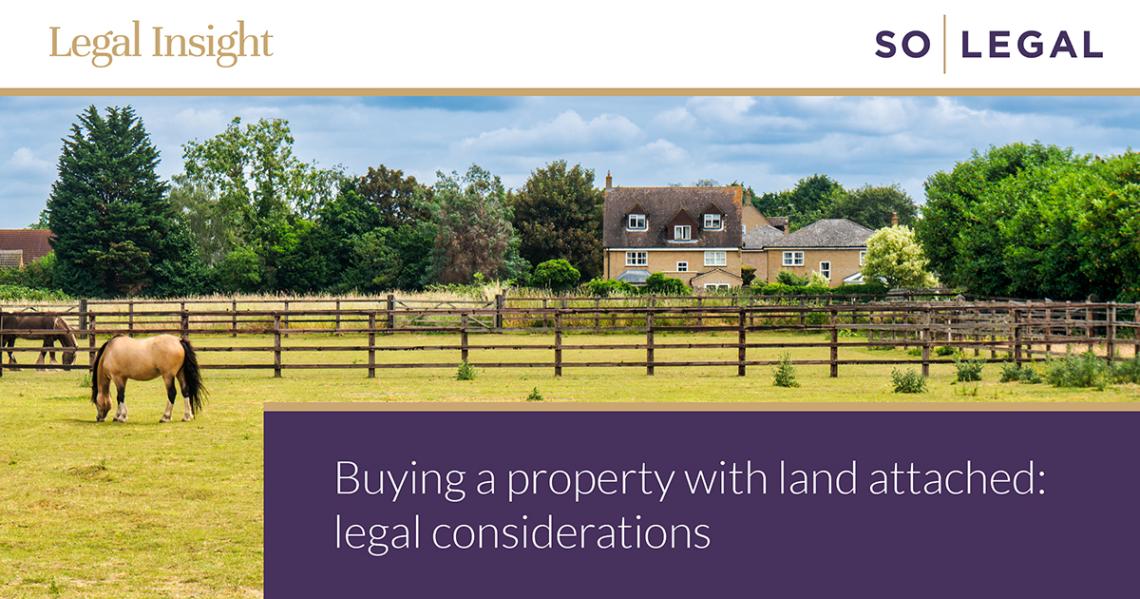
Properties with paddocks, fields, woodland or additional land can be extremely attractive to buyers looking for more space, privacy or future flexibility.
They are particularly popular in rural and coastal areas and may appeal to families, equestrian buyers, hobby farmers or purchasers looking for long-term development potential.
However, land can create legal and practical issues which do not arise with standard residential purchases.
Understanding exactly what is being purchased, how the land can be used and whether any restrictions apply is an important part of the conveyancing process.
If you are purchasing a property with additional land, contact our conveyancing specialists for advice at an early stage to help identify potential issues before they affect your transaction.
Is all of the land included in the title?
One of the first issues your solicitor will investigate is whether all of the land being marketed forms part of the legal title being transferred.
This is particularly important where properties include paddocks, woodland, access tracks or areas which have historically been used alongside the property but may not formally form part of the registered title.
Buyers should ensure the title plan accurately reflects what they believe they are purchasing.
Where discrepancies arise, additional investigations may be required before the transaction can proceed.
Are there restrictions on how the land can be used?
Sometimes. The fact that land is physically attached to a property does not necessarily mean it can be used for any purpose the owner chooses.
Restrictive covenants, planning restrictions and agricultural designations can all affect how land may be used in the future.
For example, buyers may wish to:
- Keep horses or other livestock.
- Construct outbuildings or stables.
- Use land for business purposes.
- Create additional access points.
- Explore future development opportunities.
Obtaining advice early can help buyers understand whether their intended use is likely to be permitted.
Are there any rights of way or access issues?
Properties with land attached are often affected by rights of way, easements or access arrangements benefiting neighbouring landowners or utility providers.
These rights can affect privacy, future development potential and the way the land can be used.
Buyers should understand:
- Whether third parties have rights to cross the land.
- Whether services such as drainage or utilities pass through the land.
- Whether access rights exist for neighbouring properties.
- Whether the property itself relies on access across neighbouring land.
These issues are not necessarily problematic but should be properly understood before contracts are exchanged.
Who is responsible for boundaries and maintenance?
Additional land often brings additional responsibilities. Buyers should understand the extent of any obligations relating to boundary fences, hedges, ditches, access tracks and drainage arrangements.
Where land has historically been maintained informally by neighbouring owners, it is sensible to establish how these arrangements operate in practice.
Could the land have development potential?
Sometimes. Land attached to residential properties can occasionally have future development potential, but assumptions should never be made.
Planning policies, access arrangements, restrictive covenants, rights of way and utility infrastructure can all affect what may be possible in the future.
Buyers considering a purchase partly because of perceived development opportunities should obtain specialist advice before proceeding.
What legal work is involved?
Advice on purchasing a property with land attached may involve:
- Reviewing title plans and boundary arrangements.
- Investigating rights of way and easements.
- Reviewing restrictive covenants affecting the land
- Identifying access arrangements and maintenance obligations.
- Advising on issues which may affect future use or development potential.
What are the risks of buying a property with additional land?
Purchasing a property with additional land can be a potentially profitable investment for buyers. However, thorough due diligence should be undertaken before going ahead with the purchase.
Land often comes with rights of way (easements), but it is not uncommon for additional land to be subject to unusual conditions compared with a standard residential property purchase. For example, there may be a restrictive covenant on the title that prohibits the erection of any buildings on the land, making it extremely difficult for potential developers to build on it.
Landlocked land is also a risk when purchasing a property with additional land. This is where a parcel of land has no direct legal access to a public road, meaning the owner may need to cross neighbouring land to access it. If there is no legal right or agreement in place allowing access across the neighbouring land, doing so could amount to trespass.
Obtaining a mortgage on land may also be more difficult, as some lenders are reluctant to lend against land due to the additional risks involved.
Properties with additional land can make excellent purchases, but they often require more detailed investigation than standard residential transactions. Understanding ownership boundaries, access rights and any restrictions at an early stage can help buyers avoid costly surprises after completion.
Where additional land forms part of a rural property purchase, our guide to rural property conveyancing explains some of the wider legal issues buyers may need to consider.
Guidance from our solicitors
Properties with paddocks, woodland and additional land often involve issues which do not arise in standard residential transactions and may require additional investigation into title documentation, access rights and restrictions on use.
Joe Kennedy, solicitor, says:
“It is common to see buyers purchasing property with additional land assuming the land is subject to the same rights as the property; however, land adjoining a property may be subject to additional rights and, more commonly, can be on a separate title. Using a solicitor with experience beyond straightforward conveyancing can be particularly valuable in these transactions, helping to identify and address any additional issues affecting the land at an early stage.”
Our residential property team regularly advises buyers purchasing rural and non-standard properties and can help identify potential issues before contracts are exchanged.
Where appropriate, we can also work alongside our commercial property and property development teams to provide joined-up advice on more complex transactions.
If you are considering purchasing a property with land attached, our solicitors can help you understand the implications and make an informed decision before proceeding.
Buying a property
with land attached?


